The Role of Literature in Advancing Girth Welding Practices
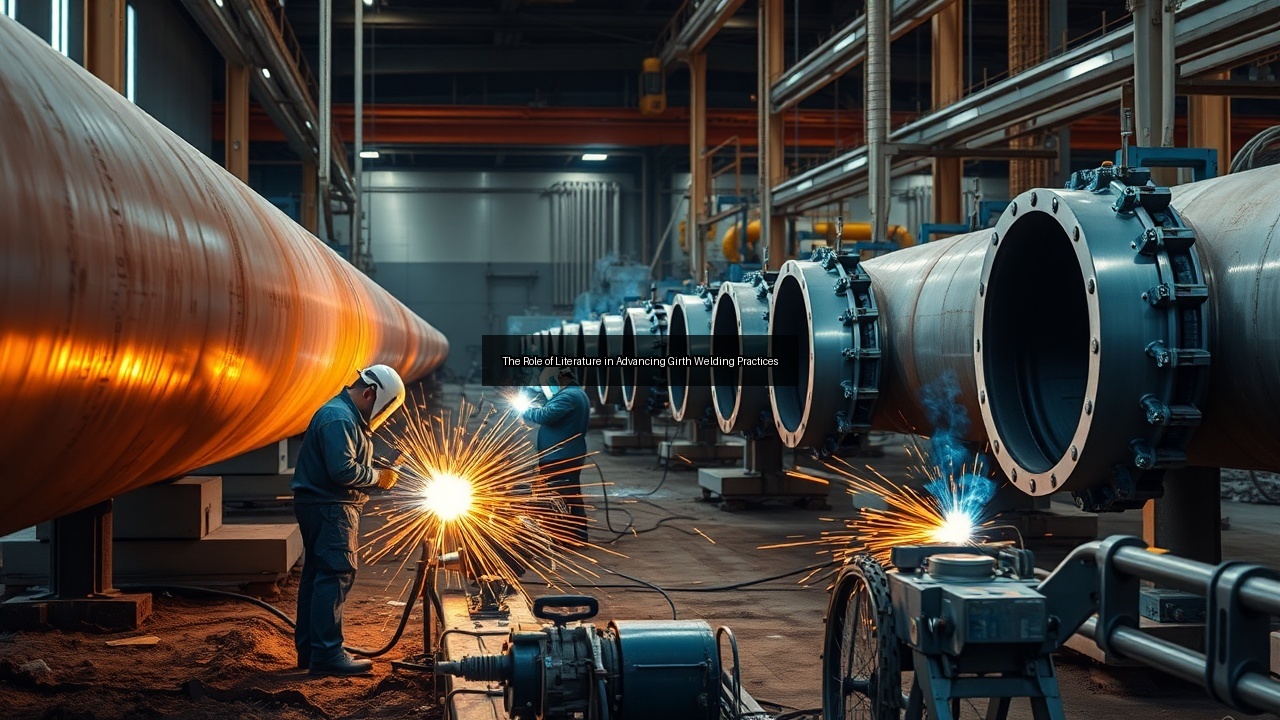
Understanding Pipeline Girth Welding
Overview of Girth Welding Techniques
Pipeline girth welding refers to the process of joining the ends of pipes in a horizontal or circumferential manner, forming a strong and durable joint essential for maintaining the integrity and functionality of pipelines. Various techniques exist for girth welding, including manual metal arc welding (MMAW), gas tungsten arc welding (GTAW), and flux-cored arc welding (FCAW). Each method has unique advantages and specific applications depending on the materials used and environmental conditions.
The selection of a suitable girth welding technique hinges on factors such as the type of pipeline, the materials involved—often stainless steel or carbon steel—and the intended service conditions. For instance, pipelines exposed to corrosive environments may require specialized welding processes to enhance weld strength and longevity. Understanding these techniques illuminates the critical role they play in ensuring the reliability of pipelines across varied industries.
Importance of Weld Quality in Pipelines
The quality of welds directly influences the overall safety and efficiency of pipelines. High-quality girth welds can withstand operational stresses, including pressure fluctuations and environmental challenges, without failing. Conversely, poor welds can lead to catastrophic failures, leaks, and significant financial losses. Therefore, maintaining stringent quality control throughout the welding process becomes imperative. This includes ensuring proper welder training, adhering to established welding procedures, and implementing rigorous weld inspection protocols.
Quality assurance in girth welding also involves understanding the principles of weldability, which dictate how well a material can be welded without defects. Factors such as temperature control, filler material selection, and post-weld heat treatment significantly impact weld quality. By emphasizing these aspects, the industry can achieve reliable and robust welded joints essential for the safe transportation of fluids across extensive pipeline networks.
Common Materials Used in Pipeline Girth Welding
Choosing the right materials for girth welding is crucial for achieving desired performance characteristics. Commonly used materials include carbon steel, stainless steel, and occasionally plastic composites for specific applications. Each material exhibits distinct properties that influence its weldability and the resulting weld quality. For instance, stainless steel offers excellent corrosion resistance, making it a preferred choice for pipelines transporting corrosive substances.
Carbon steel, on the other hand, remains popular for its strength and cost-effectiveness. However, it may be more susceptible to corrosion, necessitating protective coatings or cathodic protection systems. Understanding the properties of these materials helps welders and engineers select the most appropriate options for specific pipeline applications, ensuring optimal performance and longevity.
Literature's Influence on Welding Practices
Historical Perspectives on Girth Welding
The evolution of girth welding practices is deeply rooted in historical literature that documents advancements in technology and methodology. Early texts focused on basic welding techniques, gradually expanding into comprehensive studies on metallurgy and welding science. These foundational works laid the groundwork for understanding the intricacies of girth welding, including the influence of heat input, material properties, and joint design on weld quality.
As industries progressed, so did the body of literature surrounding girth welding. Authors began to explore innovative techniques and share case studies that highlighted successful applications of various welding methods. This historical perspective not only showcases the development of girth welding but also emphasizes the importance of continuous learning in refining practices, enhancing safety, and improving overall pipeline performance.
Recent Advances in Welding Literature
Contemporary literature on girth welding reflects significant advancements in technology and methods, including the introduction of automated welding systems and sophisticated monitoring techniques. Recent studies emphasize the need for precision in welding parameters to prevent defects and enhance weld strength. Innovations in computational modeling and simulation have also emerged, allowing engineers to predict the performance of welds under various conditions.
Moreover, the integration of digital tools and data analysis into welding practices enhances decision-making processes. By consulting recent literature, professionals gain insights into best practices, emerging challenges, and innovative solutions that foster improved girth welding outcomes. This ongoing dialogue between theory and practice drives the industry forward, ensuring that welding practices evolve in tandem with technological advancements.
Case Studies Highlighting Successful Girth Welds
Case studies serve as invaluable learning tools in the realm of girth welding. They provide real-world examples of successful welds and highlight the best practices that led to those successes. For instance, a case study on a major pipeline project may reveal how meticulous adherence to welding procedures, combined with advanced inspection technologies, resulted in welds that exceeded strength requirements and performed flawlessly under pressure.
Such case studies often emphasize the role of thorough weld inspection, including non-destructive testing methods that ensure integrity without compromising the weld. By analyzing these success stories, professionals can glean insights into effective girth welding strategies, fostering a culture of excellence and continuous improvement in pipeline construction and maintenance.
Inspection and Testing in Girth Welding
Weld Inspection Techniques: A Comprehensive Guide
Weld inspection plays a critical role in ensuring the integrity of girth welds. Various inspection techniques, both visual and non-destructive, are employed to assess weld quality. Visual inspection remains the first line of defense, allowing inspectors to identify surface defects such as cracks, undercuts, and porosity. Comprehensive weld inspection often combines visual techniques with advanced methods, ensuring a thorough evaluation of weld integrity.
Non-destructive testing (NDT) methods, including ultrasonic testing and radiographic inspection, provide deeper insights into the internal structure of welds. These techniques enable inspectors to detect subsurface flaws that may compromise the weld’s performance. A comprehensive guide to weld inspection emphasizes the importance of selecting appropriate methods based on the specific project requirements, materials, and environmental conditions.
Non-Destructive Testing Methods
Non-destructive testing (NDT) methods stand as crucial allies in the realm of girth welding inspection. Techniques such as ultrasonic testing (UT) and radiographic testing (RT) provide insights into weld integrity without damaging the weld itself. Ultrasonic testing utilizes high-frequency sound waves to detect internal flaws, allowing for a detailed analysis of the weld’s structure. This method proves particularly effective in identifying issues related to weld strength and continuity.
Radiographic testing employs X-rays or gamma rays to produce images of the weld, revealing any internal defects. Both methods are essential in confirming that girth welds meet the stringent requirements for pipeline safety and performance. By incorporating NDT into the inspection process, professionals can ensure that each weld adheres to industry standards, significantly reducing the risk of failures in the field.
The Role of Ultrasonic Testing in Girth Weld Integrity
Ultrasonic testing (UT) has become a cornerstone of girth weld inspection, offering a reliable means of evaluating weld integrity. This method involves sending ultrasonic waves through the welded material and analyzing the reflected signals to detect inconsistencies. UT excels in identifying flaws such as cracks, inclusions, and voids that could jeopardize the strength of the weld.
Challenges and Innovations in Girth Welding
Addressing Corrosion in Welds
Corrosion presents a formidable challenge in girth welding, particularly for pipelines that transport aggressive fluids. Corrosion can occur at the weld interface and affect the surrounding base material, leading to premature failures. Understanding the mechanisms of corrosion and implementing effective mitigation strategies is essential for maintaining the integrity of welded joints.
The Impact of Temperature on Weld Strength
Temperature significantly influences the quality and strength of girth welds. Both pre-heating and post-weld heat treatment are critical processes that control the thermal environment during welding. Pre-heating minimizes the risk of cracking and ensures proper fusion between materials, particularly when welding high-strength steels or materials with low weldability. Post-weld heat treatment further refines the mechanical properties of the weld, enhancing its strength and toughness.
Emerging Technologies: Friction Stir Welding for Pipelines
Friction stir welding (FSW) has emerged as an innovative technique for girth welding, particularly for aluminum and certain plastic materials. This solid-state welding process generates heat through mechanical friction, allowing for the joining of materials without melting them. The resulting welds exhibit superior mechanical properties and reduced distortion, making FSW an attractive option for pipeline construction.
See Also
- Understanding the Girth Weld Scope in Pipeline Projects
- Key Factors Influencing Pipeline Girth Weld Quality
- Essential Tools and Equipment for Girth Pipeline Welding
- Understanding the Role of Non-Destructive Testing in Girth Welds