Exploring Desiccant Technology in Heavy Duty Pool Dehumidifiers
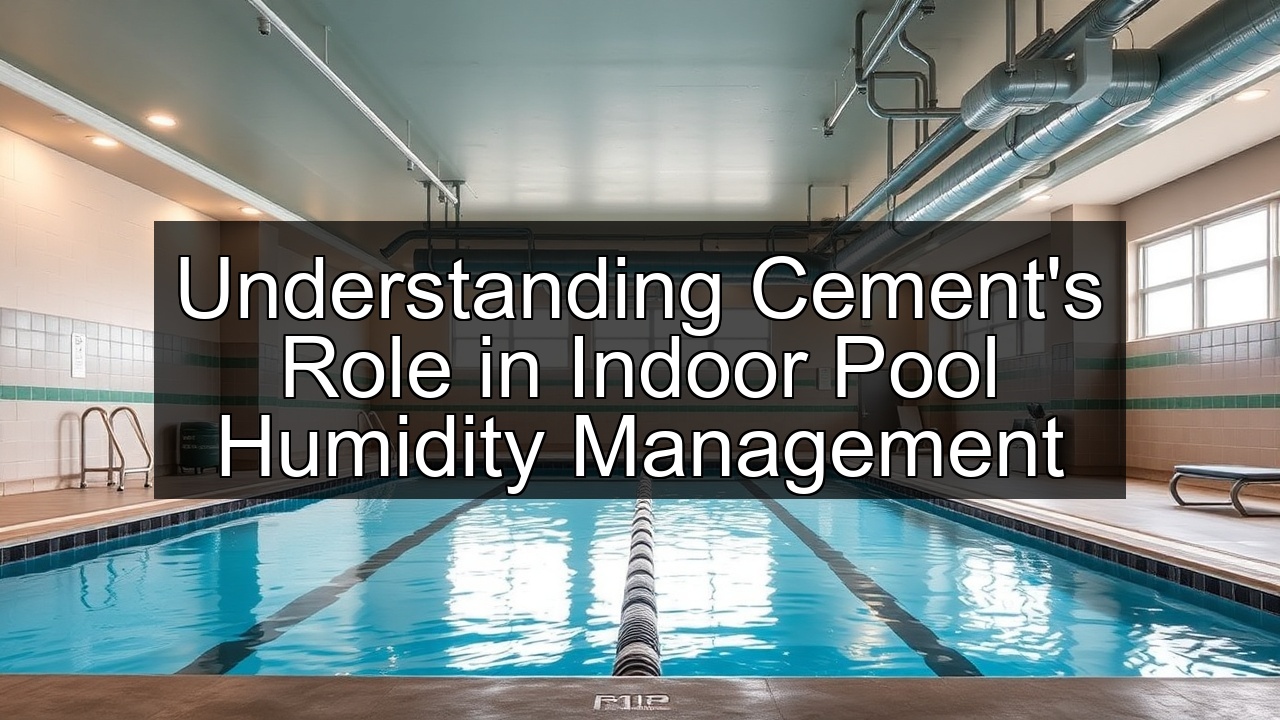
Understanding Desiccant Technology in Dehumidifiers
What is Desiccant Technology?
Desiccant technology stands at the forefront of advanced dehumidification methods, particularly in demanding environments like indoor pools. This approach relies on moisture-absorbing materials, known as desiccants, to pull water vapor from the air without relying on traditional cooling processes. Common desiccants include silica gel or molecular sieves, which attract and hold humidity through chemical adsorption. In swimming pool dehumidifiers, this technology shines because it operates effectively across a wide temperature range, even in cooler conditions where compressor units falter. Experts in humidity control praise desiccants for their ability to maintain optimal relative humidity levels in natatoriums, preventing issues like condensation on surfaces. Unlike mechanical systems, desiccant dehumidifiers use a rotating wheel coated with the absorbent material, ensuring continuous operation. This makes them ideal for heavy-duty applications in commercial swimming pools, where consistent moisture removal proves essential. Facility managers turn to desiccant technology for its reliability in large rooms filled with evaporating water from heated pools. By integrating this into pool dehumidifiers, owners achieve dehumidified air that enhances comfort and protects infrastructure, setting the stage for efficient climate control without excessive energy demands.
How Desiccant Dehumidifiers Work
Desiccant dehumidifiers function through a clever cycle of absorption and regeneration, making them powerhouse solutions for swimming pool humidity control. Air enters the unit and passes over a slowly rotating desiccant wheel, where the material captures moisture molecules, drying the air effectively. This process happens at room temperature, preserving the warmth needed in indoor pools. Once saturated, the wheel rotates into a heating zone, where hot air—often from a built-in heater or external source—drives off the collected water as vapor, reactivating the desiccant for reuse. Exhaust fans then vent the humid air away, often outdoors. In heavy-duty pool dehumidifiers, this setup handles high volumes of moist air generated by swimming activities and pool heating. The technology excels in natatoriums by maintaining dehumidified environments that feel comfortable and safe. Engineers design these systems with precise controls to monitor airflow and regeneration cycles, ensuring peak performance. For indoor swimming pools, desiccant dehumidifiers integrate seamlessly with existing HVAC, providing targeted dehumidification without overcooling the space. This method not only removes excess moisture but also recycles heat, boosting overall energy saving in commercial setups.
Comparing Desiccant vs. Compressor-based Dehumidifiers
Desiccant dehumidifiers outperform compressor-based models in key areas, especially for heavy-duty swimming pool applications. Compressor units cool air below its dew point to condense moisture, then reheat it—a process that works well in warm climates but loses efficiency below 65°F, common in indoor pools. Desiccant technology bypasses this limitation by absorbing humidity chemically, thriving in cooler temperatures and delivering drier air faster. For pool moisture control, desiccants handle the constant evaporation from heated water without the frost buildup that plagues compressors. Energy-wise, desiccants often prove more efficient in low-temperature scenarios, though they require heat for regeneration, which can be sourced from waste heat in natatoriums. Compressor dehumidifiers suit smaller, warmer spaces, but for commercial swimming pools, desiccants offer superior durability and lower long-term costs. Experts recommend desiccant dehumidifiers for facilities needing robust humidity control, as they integrate better with heat pumps and DCA dehumidifier for swimming pool heaters. In comparisons, desiccant models excel in maintaining relative humidity around 50-60%, crucial for preventing mold in indoor pools. While initial costs run higher, their reliability in demanding environments like YMCAs makes them the go-to for dehumidification in heavy-duty settings.
Importance of Humidity Control in Indoor Pools
The Role of Relative Humidity in Natatoriums
Relative humidity dictates the comfort and longevity of natatoriums, those dedicated indoor pool rooms buzzing with activity. At ideal levels of 50-60%, relative humidity keeps swimmers comfortable, reduces eye irritation, and prevents excessive condensation on walls and ceilings. High humidity, often exceeding 70% in poorly managed indoor pools, leads to clammy air that discourages users and promotes bacterial growth. Effective humidity control through swimming pool dehumidifiers maintains this balance, ensuring the air feels fresh despite constant water evaporation from heated pools. In large facilities, relative humidity fluctuations affect everything from air quality to structural integrity, making precise monitoring vital. Desiccant dehumidifiers excel here, pulling moisture directly to stabilize levels without chilling the space. Pool operators track relative humidity with sensors integrated into climate control systems, adjusting dehumidification as needed during peak usage. This focus not only enhances user experience but also safeguards equipment like water filters from corrosion. Natatoriums thrive when relative humidity stays in check, fostering environments where swimming pools serve communities year-round without the pitfalls of unchecked moisture.
ASHRAE Guidelines for Indoor Pool Climate Control
ASHRAE sets the gold standard for indoor pool climate control, outlining guidelines that prioritize health, safety, and efficiency in natatoriums. Their recommendations call for maintaining relative humidity between 50% and 60% to minimize condensation and respiratory issues, while keeping air temperatures 2-4°F above water temperature for comfort. ASHRAE emphasizes ventilation rates of at least 0.48 CFM per square foot in swimming pool areas, ensuring fresh air circulation alongside dehumidification. For heavy-duty setups, they advocate integrating desiccant dehumidifiers to handle high latent loads from evaporation. These standards guide facility designers in selecting commercial swimming pool dehumidifiers that align with energy-efficient practices. ASHRAE also stresses corrosion-resistant materials in equipment to combat humid environments. Compliance with these guidelines reduces operational costs and extends the life of indoor pools. Experts consult ASHRAE handbooks for detailed calculations on airflow and humidity control, tailoring solutions to specific room sizes. By following these protocols, owners of dehumidifiers for swimming pools achieve balanced climates that support active lifestyles without compromising air quality or structural health.
Effects of High Humidity on Pool Structures and Equipment
High humidity ravages pool structures and equipment in indoor swimming pools, accelerating wear that demands costly repairs. Excess moisture condenses on ceilings and walls, fostering mold growth and weakening cement-based materials over time. In natatoriums, unchecked relative humidity above 70% corrodes metal components like ladders, heaters, and water filters, leading to frequent breakdowns. Wooden decking warps, tiles crack from constant dampness, and electrical systems short out, posing safety risks. For dehumidifiers for pool environments, neglecting humidity control invites these issues, inflating maintenance budgets. High humidity also strains HVAC systems, forcing them to work overtime and spiking energy use. In commercial settings, such as YMCAs, this translates to downtime and unhappy users. Desiccant dehumidifiers mitigate these effects by actively removing moisture, preserving the integrity of room surfaces and prolonging equipment life. Studies show that proper swimming pool dehumidification cuts corrosion rates by up to 80%, protecting investments in heating and filtration tech. Facility managers who prioritize humidity control avoid these pitfalls, ensuring indoor pools remain vibrant hubs for fitness and recreation.
Features of Heavy Duty Pool Dehumidifiers
Key Specifications: CFM and Energy Efficiency
CFM, or cubic feet per minute, measures the airflow capacity in heavy-duty pool dehumidifiers, determining how effectively they tackle moisture in large indoor pools. Units rated at 5,000 CFM or higher suit commercial natatoriums, processing vast air volumes to maintain relative humidity. Energy efficiency, often rated by EATR (Energy Absorption Total Recovery), highlights how well dehumidifiers recover heat during operation, crucial for swimming pool humidity control. Top models boast efficiencies above 70%, slashing electricity bills in facilities running 24/7. Desiccant technology enhances this by using low-grade heat for regeneration, outperforming compressors in cool environments. When selecting dehumidifiers for swimming pools, experts scrutinize CFM against room volume—aim for 10-15 air changes per hour. Energy-saving features like variable speed fans adjust output to demand, optimizing performance. In practice, high-CFM units with strong efficiency ratings handle peak loads from heated pools without overheating the space. Integrating these specs ensures robust dehumidification, protecting structures and cutting costs for long-term operation in demanding settings.
Innovations in Desiccant Dehumidifiers: NexGen Technology
NexGen technology revolutionizes desiccant dehumidifiers, introducing advanced materials and controls for superior performance in swimming pool environments. This innovation features hybrid desiccant wheels with enhanced absorption capacity, capturing more moisture per rotation while minimizing regeneration energy. In heavy-duty pool dehumidifiers, NexGen integrates smart sensors for real-time humidity monitoring, automatically adjusting cycles to maintain ideal relative humidity in natatoriums. Developers engineered it for commercial swimming pool dehumidifiers, emphasizing corrosion resistance and quiet operation to fit seamlessly into recreational spaces. Unlike older models, NexGen recycles waste heat from pool heaters, boosting energy saving up to 30%. Experts hail its modular design, allowing easy upgrades for varying indoor pool sizes. For dehumidifier for pool applications, this technology ensures consistent moisture removal even during high-traffic hours. Facilities adopting NexGen report drier air and lower maintenance, transforming humidity control into a proactive system. As swimming pools evolve, NexGen positions desiccant dehumidifiers as the expert choice for efficient, future-proof dehumidification.
Durability and Maintenance of Commercial Dehumidifiers
Commercial dehumidifiers for swimming pools endure harsh, humid conditions, so durability starts with rugged construction using galvanized steel and epoxy coatings to resist corrosion from chlorine-laden air. Heavy-duty models feature sealed motors and desiccant wheels designed for 20+ years of service in natatoriums. Maintenance involves quarterly checks on filters, belts, and the desiccant bed to ensure peak efficiency. Cleaning water filters tied to the unit prevents clogs, while inspecting heaters maintains regeneration heat. Experts advise logging runtime to predict wear, scheduling professional servicing annually. In indoor pools, neglecting maintenance leads to reduced CFM and rising energy use, but proactive care keeps units humming. Desiccant dehumidifiers require less frequent rotor replacements than compressors, thanks to their chemical process. For commercial setups, integrating diagnostic software alerts operators to issues early. This approach extends lifespan, supports humidity control, and minimizes downtime in facilities like community centers. Owners of heavy duty swimming pool dehumidifiers invest in training staff for basic tasks, ensuring reliable performance and cost-effective operation over decades.
Selecting the Right Dehumidifier for Your Pool
Best Swimming Pool Dehumidifiers for Different Needs
Choosing the best swimming pool dehumidifiers hinges on pool size, usage, and environment, with desiccant models leading for commercial needs. For small residential indoor pools, a 1,000 CFM unit suffices, but heavy-duty options like those from Munters or Dri-Steem excel in large natatoriums, offering 10,000+ CFM for robust moisture removal. Experts rank desiccant dehumidifiers highest for their low-temperature efficiency and integration with heat pumps. Residential users favor compact compressor hybrids for dehumidifier for swimming pool setups under 2,000 square feet, while YMCAs opt for modular desiccant systems handling variable loads. Key factors include energy efficiency ratings above 60% and quiet operation below 65 dB. For high-chlorine environments, select units with antimicrobial coatings. The best indoor swimming pool dehumidifiers balance initial cost with long-term savings, often paying back in two years through reduced heating bills. Tailor choices to needs: energy-saving desiccant for cool climates, or versatile pool dehumidifiers for year-round use. Consulting HVAC pros ensures the top pick for your swimming pool dehumidification strategy.
Troubleshooting Common Issues in Pool Dehumidifiers
Troubleshooting pool dehumidifiers starts with identifying symptoms like reduced airflow or high relative humidity in the natatorium. If CFM drops, check clogged filters—clean or replace them monthly to restore suction in swimming pool dehumidifiers. Overheating often signals a faulty heater in desiccant regeneration; inspect thermostats and coils for debris. For units failing to dehumidify, verify the desiccant wheel rotates freely and isn't saturated—regenerate manually if needed. Electrical issues, such as tripped breakers, stem from moisture ingress; ensure seals remain tight around indoor pool installations. Experts recommend monitoring error codes on digital displays for quick diagnosis. In commercial dehumidifiers for pool, low refrigerant in compressor hybrids points to leaks—call pros for recharges. Vibration noises indicate loose belts; tighten or replace during routine maintenance. Addressing these promptly prevents escalation, maintaining humidity control. For persistent problems, log data like runtime and ambient conditions to pinpoint root causes. With systematic troubleshooting, owners keep dehumidifiers for swimming pools performing optimally, avoiding costly shutdowns in busy facilities.
Comparison of Indoor vs. Outdoor Pool Dehumidification Solutions
Indoor pool dehumidification solutions focus on enclosed natatoriums, where desiccant dehumidifiers dominate for precise humidity control in heated environments. These units recirculate air within the room, targeting relative humidity without venting heat loss, ideal for year-round indoor swimming pools. Outdoor pools, often semi-covered, demand different approaches like misting systems or large exhaust fans for swimming pool moisture removal, but heavy-duty dehumidifiers adapt via ducted setups. Indoor models integrate with HVAC for climate control, using CFM ratings matched to room volume, while outdoor solutions prioritize weatherproofing and higher airflow to combat wind-driven humidity. Desiccant technology suits both but shines indoors, recovering heat for energy saving; compressors work better outdoors in warmer temps. For covered outdoor pools, hybrid dehumidifiers for pool combine ventilation with absorption, though they require more maintenance against elements. Costs differ: indoor units run $10,000-$50,000, outdoor setups add weather enclosures. Experts favor indoor desiccant for efficiency in controlled spaces, reserving outdoor dehumidification for seasonal or resort pools where natural drying aids suffice.
Maximizing Efficiency and Performance
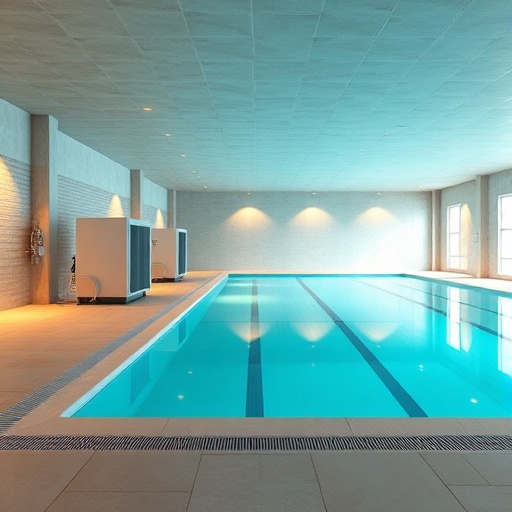
Energy-saving Features in Modern Dehumidifiers
Modern dehumidifiers pack energy-saving features that transform swimming pool operations, starting with heat recovery wheels that recapture 80% of regeneration heat for space heating. Variable frequency drives adjust fan speeds to match humidity loads, cutting electricity use by 40% in low-demand periods. Desiccant models incorporate economizer modes, drawing free cooling from outdoor air when conditions allow, ideal for indoor pools. Smart controls with IoT connectivity optimize runtime based on real-time relative humidity sensors, preventing overwork. In commercial swimming pool dehumidifiers, LED diagnostics and auto-defrost minimize waste. Pairing with heat pumps amplifies savings, as dehumidified air feeds efficiently into heating cycles. Experts note that units with high EER ratings above 3.0 deliver the best ROI, especially in natatoriums. These features not only lower bills but also extend equipment life through balanced operation. For heavy-duty setups, selecting dehumidifiers with these innovations ensures sustainable humidity control without sacrificing performance in demanding environments.
Integrating Heaters and Dryers for Enhanced Humidity Control
Integrating heaters and dryers elevates humidity control in indoor pools, creating synergistic systems for optimal climate. Desiccant dehumidifiers pair with electric or gas heaters to supply regeneration heat, while the dryers output warm, dehumidified air that feeds directly into pool heating loops. This setup recycles energy, using dryer exhaust to preheat incoming air, slashing overall consumption in natatoriums. For swimming pools, combining with heat pumps amplifies efficiency—dehumidified air raises pump effectiveness, reducing runtime. Experts design these integrations for seamless flow, ducting dryer output to room diffusers for even distribution. In commercial applications, adding inline water filters to heater circuits prevents scaling from humid air. This holistic approach maintains relative humidity at 55% while keeping water temps steady, enhancing swimmer comfort. Maintenance involves syncing controls to avoid conflicts, ensuring heaters activate only during regeneration. Facilities like community centers benefit from such setups, achieving enhanced dehumidification with minimal energy waste and superior performance across seasons.
Case Studies: Successful Implementation in YMCA and Other Facilities
YMCA facilities showcase successful desiccant dehumidifier implementations, transforming humid natatoriums into efficient havens. At a Midwest YMCA, installing a 15,000 CFM NexGen unit reduced relative humidity from 75% to 52%, cutting mold incidents and energy costs by 25%. Integration with existing heaters recycled heat, maintaining water temps without extra fuel. In a California hotel's indoor pool, a heavy-duty dehumidifier for swimming pool handled 24/7 loads, preventing condensation on glass walls and boosting guest satisfaction. Post-installation, relative humidity stabilized, and maintenance dropped 40% due to durable components. University aquatic centers report similar wins: one facility combined desiccant tech with heat pumps, achieving 30% energy saving while complying with ASHRAE guidelines. These cases highlight troubleshooting during setup—adjusting CFM for room dynamics ensured peak performance. Across YMCAs and resorts, such implementations prove commercial swimming pool dehumidifiers deliver reliable humidity control, protecting structures and enhancing user experiences in diverse settings.
See Also
- Energy Saving Tips for Heating and Dehumidifying Your Indoor Pool
- Creating a Comfortable Indoor Pool Environment with Effective Moisture Control
- Exploring the Benefits of Dehumidified Air for Swimming Pool Longevity
- The Science Behind Swimming Pool Dehumidifiers and Energy Efficiency
- The Role of CFM Ratings in Selecting Your Perfect Pool Dehumidifier